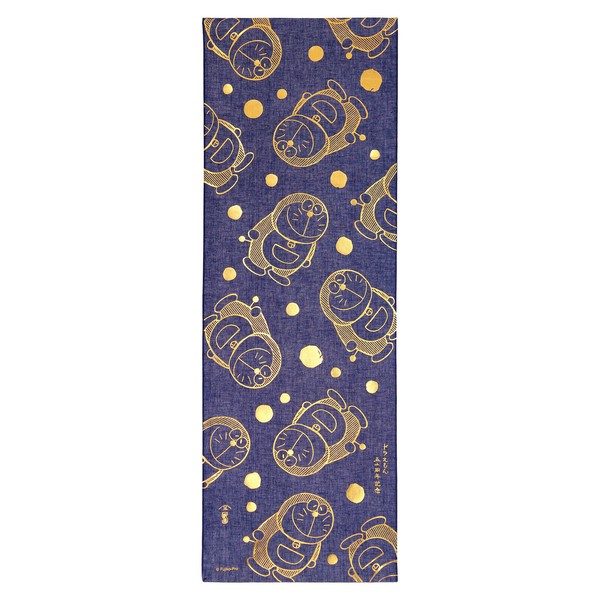
Tenugui Gold Foil Doraemon, 35 x 100 cm
- Product No.
- 03-768
- Product Name
- Tenugui Gold Foil Doraemon, 35 x 100 cm
- Size
- Approx. 35 cm x 100 cm
- Material
- 100% Cotton
- Country of Origin
- Japan
Note: Stock availability changes frequently, so please contact us to confirm current stock quantities. Large-volume orders are also welcome.
description Product Description
The "Foil-Stamped Tenugui" is crafted using golden aluminum foil dyed directly into the fabric. The foil will not peel off even after washing, allowing it to be used as a functional tenugui. Because the gold never "falls off," it is regarded as a lucky charm, symbolizing prosperity and good fortune. This makes it popular not only for everyday use, but also as a decorative item, souvenir, or special gift.
Celebrating Doraemon's 50th Anniversary (2020)
In honor of the 50th anniversary of Doraemon, one of Japan's most beloved manga series cherished by people of all ages, this tenugui was designed with deep gratitude and respect. Inspired by the original artwork from "From the Distant Future," the design features vibrant shades of hon-ai (true indigo) and bero-ai (Persian blue), symbolizing Doraemon's iconic color.
The piece incorporates the traditional Japanese decorative technique known as sunago, in which finely ground gold leaf is sprinkled through a bamboo tube to create a delicate, shimmering effect. This technique, dating back to the Nara period, is combined here with the artistry of ukiyo-e woodblock printing, resulting in a brilliant fusion of heritage craftsmanship and modern cultural tribute.
The reverse side of the fabric is plain, giving the piece a refined finish.
Notes
- As this is a handmade product, slight variations in size may occur.
- Due to the nature of the dye, some changes in color and slight bleeding may appear. Please enjoy these as part of the charm of hand-dyed items.
- Colors may transfer if exposed to water, sweat, etc. Please wash separately.
- When ironing, use a low temperature and place a cloth over the fabric.
- Traditionally, both edges of a tenugui are left unfinished to allow faster drying and for hygiene purposes. With use and washing, the fabric naturally tightens, and any fraying will stop after a few millimeters.